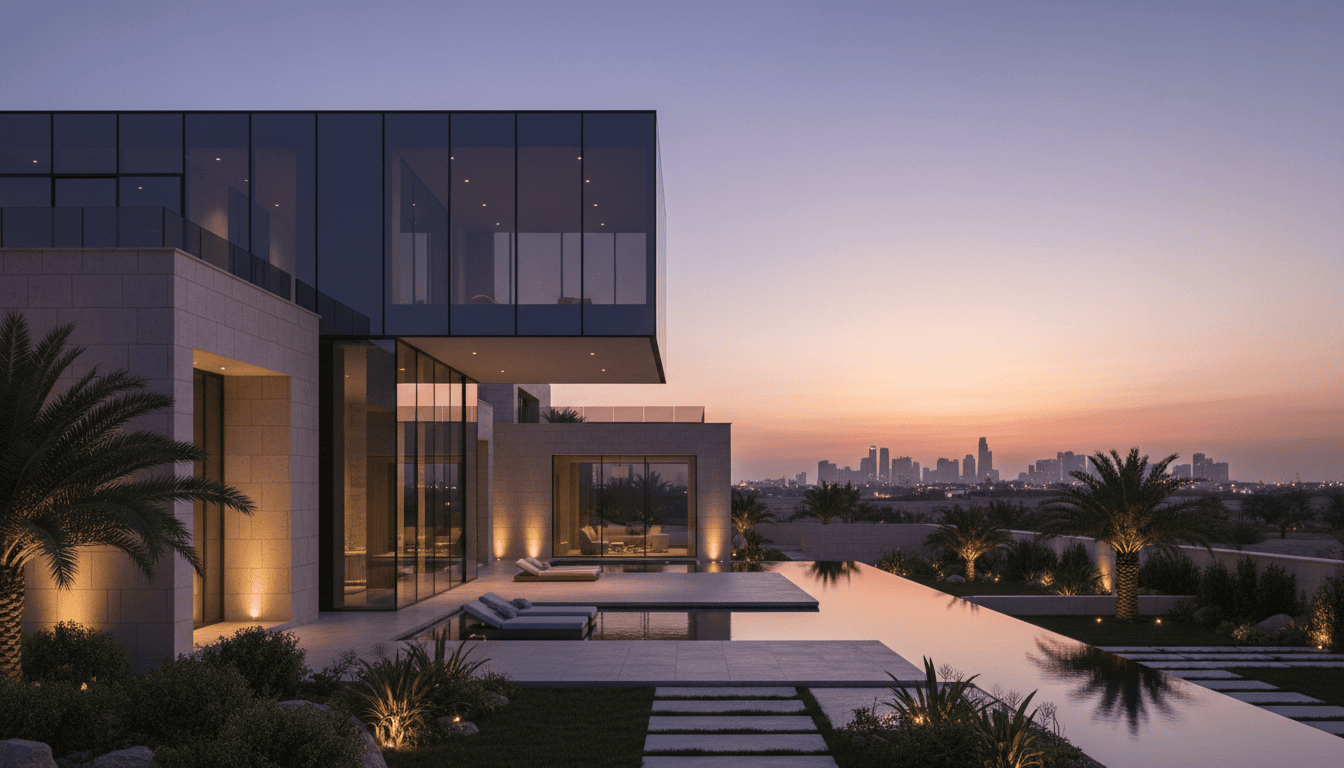
- The Giga-Project Era: Why Saudi Real Estate in 2026?
- The Legal Backbone: REGA and The New Ownership Laws
- The Game Changer: Premium Residency
- The Holy Cities: Mecca and Medina
- The Buying Process: From Absher to Title Deed
- Taxation and Fees: The 5% Reality
- Strategic Hotspots for 2026
- Riyadh: The HQ Magnet
- Jeddah: The Red Sea Gateway
- NEOM & The Giga-Projects
- The Verdict
- Related Insights
⚡ Executive Summary
By 2026, the Kingdom of Saudi Arabia (KSA) has transitioned from a closed market to a global real estate frontier. The alignment of the Real Estate General Authority (REGA) with Vision 2030 has streamlined the path for non-Saudis to acquire freehold and leasehold assets. This guide deconstructs the legal mechanisms—specifically the Premium Residency visa—that now serve as the golden key for investors. We analyze the shift from simple residential ownership to complex commercial investments, the nuances of the Holy Cities (Mecca and Medina), and the tax frameworks that safeguard capital. This is not just about buying a home; it is about participating in the G20’s fastest-growing non-oil economy.
The Giga-Project Era: Why Saudi Real Estate in 2026?
If you were looking at the Saudi market a decade ago, the door was barely ajar. Today, it’s not just open; the hinges have been removed. We are witnessing the maturation of Vision 2030. The dust has settled on the initial announcements of NEOM and The Red Sea Project, and we are now seeing concrete asset delivery. For the global investor, 2026 represents a sweet spot: the regulatory framework has stabilized, yet asset prices in emerging districts still offer significant upside compared to saturated markets like London or New York.
The narrative has shifted from “Can I buy?” to “Where should I position my capital?”. Whether you are an expat C-suite executive looking to anchor your wealth in Riyadh’s Sedra community, or an institutional investor eyeing logistics hubs in Jeddah, the rules have been rewritten to favor transparency and speed.
The Legal Backbone: REGA and The New Ownership Laws
The days of ambiguous bureaucratic loops are largely behind us. The Real Estate General Authority (REGA) has consolidated ownership laws into a unified framework. The core legislation governing foreign ownership dictates that non-GCC nationals may own real estate for their private residence, provided they obtain approval from the Ministry of Interior—a process now largely automated.
The Game Changer: Premium Residency
Let’s cut to the chase—the Premium Residency (Iqama Mumayyaza) is the most powerful tool in your arsenal. Unlike standard employment visas linked to a sponsor, this self-sponsored status grants you rights almost identical to citizens regarding property. Holders can:
- Buy residential, commercial, and industrial property in their own name.
- Freely trade assets without complex licensing requirements.
- Pass assets to heirs with clearer succession protocols.
Without Premium Residency, your ownership is generally tethered to your continued valid residency status in the Kingdom, which introduces a layer of risk that serious investors prefer to eliminate.
The Holy Cities: Mecca and Medina
This is where nuance is critical. Despite rumors of total liberalization, the sanctity of the Holy Cities mandates strict laws. As of 2026 regulations:
- Freehold (Raqabah): Strictly reserved for Saudi nationals.
- Usufruct (Manfa’ah): Foreigners (specifically Muslims in most zones) can acquire usufruct rights for up to 99 years. This is essentially a long-term leasehold that allows you to rent out or utilize the property, but the underlying land remains with a Saudi entity.
For investors, usufruct in Mecca offers some of the highest rental yields in the region due to religious tourism (Hajj and Umrah), but it requires a different exit strategy than a freehold purchase in Riyadh.
The Buying Process: From Absher to Title Deed
Saudi Arabia has digitized property transfer to a level that puts many Western nations to shame. The process in 2026 looks like this:
- Eligibility Check: Ensure your residency (Iqama) is valid or your Premium Residency is active.
- Property Vetting: Use the Real Estate Registry (RER) to ensure the Title Deed is digitized and free of encumbrances. Never buy a property with a paper deed that hasn’t been updated to the digital registry.
- MoI Approval: Submit a request via the Absher platform under “My Services > General Services > Application for Ownership of Real Estate for Non-Saudis.”
- Transaction: Once approved, the transfer happens at a Wajiz center or via the E-Notary system. Money moves, and the Title Deed updates instantly.
Taxation and Fees: The 5% Reality
Forget VAT on property sales. Saudi Arabia utilizes the Real Estate Transaction Tax (RETT). It is a flat 5% tax on the total property value, payable by the seller (though often negotiated). There is no annual property tax, which is a massive incentive for holding prime assets. However, keep an eye on White Land Tax fees if you are buying undeveloped plots in urban boundaries—the government wants you to build, not speculate on dust.
Strategic Hotspots for 2026
Riyadh: The HQ Magnet
With the Regional Headquarters Program forcing multinationals to base in Riyadh, demand for luxury residential units in North Riyadh (Al Malqa, Al Narjis) is outstripping supply. Yields here are driven by high-income expat rentals.
Jeddah: The Red Sea Gateway
Jeddah Central is revitalizing the coastline. The historic district is charming, but the smart money is on the northern expansion near the Creek and the airport, catering to the logistics and tourism boom.
NEOM & The Giga-Projects
Buying here isn’t like buying a condo in Dubai. It involves specific investment contracts. By 2026, Sindalah and The Line’s early phases are operational. These are high-entry, high-risk, high-reward plays suited for the adventurous portfolio.
The Verdict
Foreign property ownership in Saudi Arabia is no longer a novelty; it is a structural pillar of the economy. The friction has been removed. The question now is one of strategy. Do you want the steady capital appreciation of a Riyadh villa, or the aggressive yield of a pilgrim-focused unit in Mecca? The choice is yours, but the time to decide is now.
KSA Property Ownership Matrix 2026
A comparative analysis of ownership rights based on residency status.
| Stage / Phase | Residency Status | Property Type Allowed | Mecca/Medina Access | Commercial Rights | Transfer Tax (RETT) |
|---|---|---|---|---|---|
| undefined | |||||
| undefined | |||||
| undefined | |||||
| undefined |
Decision Matrix: When to Adopt
Frequently Asked Questions
Can I get residency by buying property in Saudi Arabia?
Yes. Under the Premium Residency ‘Property Owner’ category, purchasing a residential property worth at least SAR 4 million (approx. $1.06M USD) grants you permanent residency. Lower tiers exist for renewable residency.
Can foreigners inherit property in Saudi Arabia?
Yes, inheritance laws for foreigners are respected, provided the heirs also satisfy eligibility requirements to own property. However, it is strongly advised to have a distinct will registered within the Saudi legal system to avoid Sharia distribution defaults if that is not your intent.
Is financing available for foreigners?
Absolutely. Most major Saudi banks (SNB, Al Rajhi, SAB) offer mortgage products to residents. Loan-to-value (LTV) ratios differ for expats compared to locals, typically requiring a higher down payment (often 20-30%).
Can I buy commercial property as an individual?
Generally, no. Standard foreign ownership laws cover residential use for the applicant’s dwelling. To buy commercial real estate for income generation, you typically need to establish a foreign investment company (MISA license) or hold a specific tier of Premium Residency that allows commercial investment.
What is the ‘White Land Tax’?
This is a fee imposed on undeveloped land within urban boundaries, intended to combat hoarding. If you buy a plot, plan to develop it. It does not apply to built residential homes.
Secure Your Saudi Asset
Navigating REGA regulations and Premium Residency tiers requires precision. Don’t risk your capital on outdated advice. Download our 2026 Investment Checklist.