⚡ Executive Summary
As Riyadh accelerates toward its 2030 goals, the center of gravity has shifted definitively North. Investors are currently split between two dominant narratives: the established prestige of Al-Malqa and the aggressive growth trajectory of Al-Narjis. Our 2026 outlook suggests a divergence in strategy. Al-Malqa remains the ‘safe haven’ for wealth preservation and consistent rental yields, acting as the de facto headquarters for corporate executives. However, Al-Narjis represents the ‘multiplier play.’ Situated directly in the corridor of the new King Salman International Airport, Al-Narjis is poised for higher capital appreciation percentages as infrastructure projects—specifically the Metro lines and North-South arterials—reach maturity by 2026.
The North Riyadh Dilemma: Old Money vs. The New Frontier
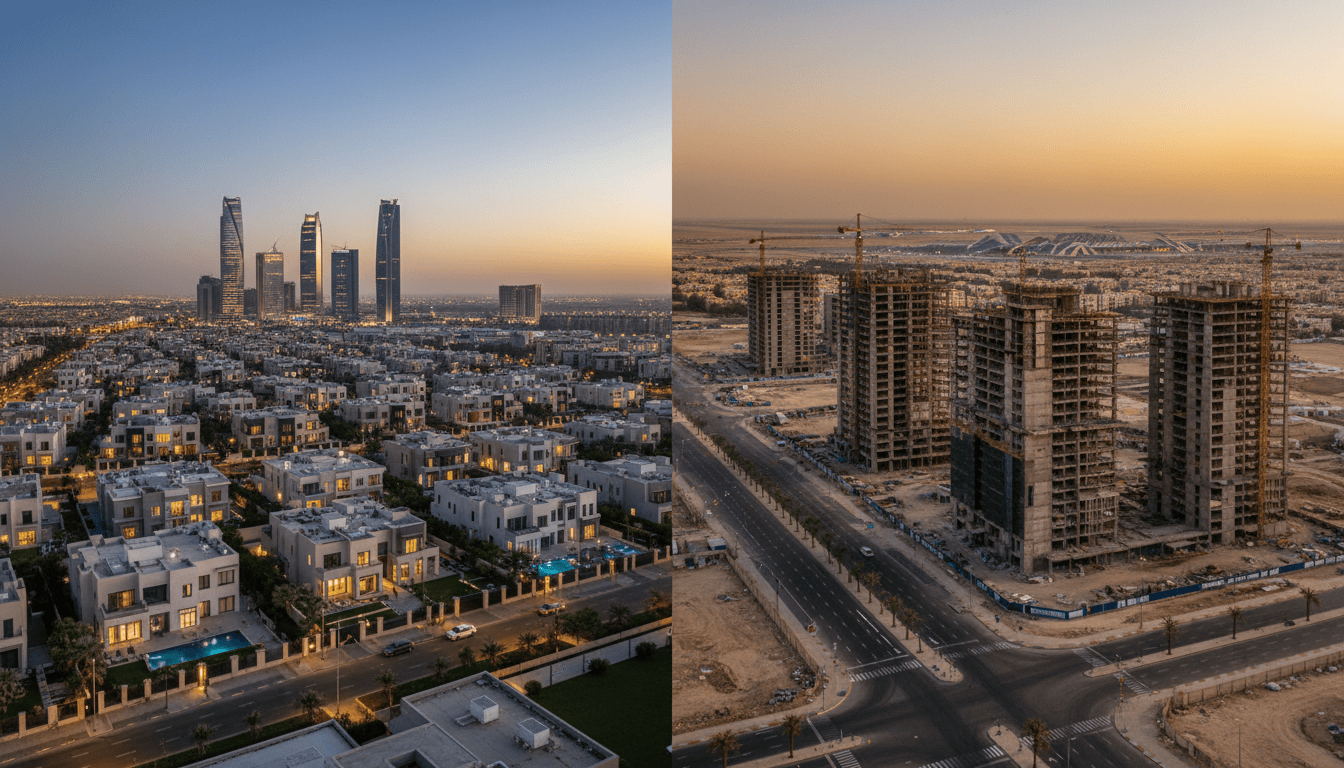
If you drove through North Riyadh five years ago, the distinction was clear. Al-Malqa was where the villas were finished; Al-Narjis was where the cranes were parked. Today, that line is blurring, creating a complex headache for investors holding capital in a market that moves faster than Western equivalents.
Riyadh is not just expanding; it is evolving. With the PIF’s giga-projects coming online and the countdown to Expo 2030 ticking, the question isn’t just “should I buy in the North?” It is “Which North?”
Al-Malqa has long held the crown. It is the sophisticated elder sibling—paved, polished, and priced accordingly. But Al-Narjis is the hungry challenger, riding the tailwinds of the King Salman International Airport announcement and the massive infrastructure overhaul north of King Salman Road.
Here is the reality on the ground as we look toward the 2026 horizon.
Al-Malqa: The ‘Beverly Hills’ Defense
Let’s call Al-Malqa what it is: the finished product. Located strategically west of King Fahd Road and north of the Northern Ring Road, it is the logistical heart of affluent Riyadh. It neighbors the King Abdullah Financial District (KAFD), making it the default residential choice for the banking, consulting, and tech elite moving their HQs to the capital.
The 2026 Outlook for Malqa:
- Saturation Point: The district is nearly fully developed. You aren’t buying “potential” here; you are buying scarcity. In 2026, finding empty plots for development will be the exception, not the rule. This scarcity will keep floors regarding pricing high.
- Yield over Growth: Don’t expect the 40% year-on-year jumps we saw in the post-pandemic boom. Malqa is entering a stabilization phase. It is an income play. You buy here to lease to an expat executive for 250,000 SAR a year.
- Lifestyle Premium: The coffee shops are open, the international schools are operational, and the traffic is… well, it’s Riyadh. But the connectivity to Prince Mohammed bin Salman Road gives it a massive advantage for cross-city commutes.
Al-Narjis: The ‘Airport’ Offensive
If Malqa is the present, Al-Narjis is the future. Spanning the area east of Abu Bakr Al-Siddiq Road and stretching north toward the airport boundary, this is a district in metamorphosis.
The 2026 Outlook for Narjis:
- The Airport Effect: This cannot be overstated. The King Salman International Airport isn’t just a terminal; it’s an aerotropolis. Al-Narjis is the foyer to this massive economic engine. By 2026, as airport construction phases become visible, the psychological value of “proximity to the global gateway” will spike property values.
- Infrastructure Maturity: Currently, Narjis suffers from growing pains—road diversions and construction dust. By 2026, the major north-south arterials (King Abdulaziz and Abu Bakr) will be optimized to feed the airport traffic, turning Narjis from a construction site into a logistical hub.
- Price Arbitrage: The price per square meter in Narjis still trails Malqa. That gap is the investor’s margin. As the amenities gap closes, the price gap will follow.
The Metrics: Head-to-Head
Real estate is a windscreen sport, not a rearview mirror game. Looking at 2023 data won’t help you. You need to model for 2026. Here is the comparative friction:
1. Entry Price vs. Exit Strategy
In Malqa, you are paying a premium for certainty. The risk is low, but the entry ticket is high. It is difficult to find “deals” in Malqa unless you are buying distressed assets. Your exit strategy in Malqa is likely selling to an end-user who wants a prestige address immediately.
In Narjis, the entry is moderate-to-high (having risen sharply recently), but the ceiling hasn’t been hit. Your exit strategy in 2026 is selling to investors riding the pre-Expo 2030 wave or early airport employees needing high-end housing nearby.
2. The Traffic & Connectivity Factor
Malqa wins on access to KAFD and downtown. However, Narjis wins on access to the Airport, Princess Nourah University, and the expanding leisure zones north of King Salman Road. If your tenant works in KAFD, they want Malqa. If your tenant travels weekly or works in the new logistics/aviation sectors, they will demand Narjis.
3. The “Vibe” Check
Malqa feels established. It has dense commercial strips, established fine dining, and mature parks. Narjis is still finding its soul. It is currently a mix of high-end modern villas and empty lots. However, the commercial strips in Narjis are being built with newer codes—think wider pavements, better parking, and more “lifestyle” centers rather than strip malls.
Strategic Recommendation for 2026
The decision requires honest self-reflection regarding your capital timeline.
Scenario A: The Wealth Preserver. You have 10 Million SAR. You want to park it where it won’t lose value, and you want a cheque in the mail every six months.
Go to Al-Malqa. Buy a commercial strip or a compound of luxury villas. It’s blue-chip.
Scenario B: The Aggressive Grower. You have 10 Million SAR. You want it to be 15 Million SAR by 2027 so you can leverage into a larger development.
Go to Al-Narjis. Specifically, look for the “Southern Narjis” blocks closer to Prince Anas Bin Abdulaziz Road, or the northern tip bordering the airport zone. The appreciation delta there will outperform the established market.
The Wildcard: Expo 2030
While the Expo site is located towards the north-east (near the airport), Al-Narjis acts as a natural residential spillover for the influx of consultants, engineers, and delegates that will flood the city starting in 2026/2027. Malqa is too far west to benefit as directly from the immediate Expo logistics as Narjis will.
Final Verdict
The “Malqa Premium” is real, but the “Narjis Velocity” is where the smart money is moving for the medium term. By 2026, the dust in Narjis will settle, revealing a district that rivals Malqa in status but beats it on modern urban planning.
The North Riyadh Investment Matrix (2026)
A comparative analysis of the two leading districts based on projected 2026 market conditions.
| Stage / Phase | Metric | Al-Malqa (The Sovereign) | Al-Narjis (The Challenger) |
|---|---|---|---|
| undefined | |||
| undefined | |||
| undefined | |||
| undefined | |||
| undefined |
Decision Matrix: When to Adopt
Frequently Asked Questions
Which district has a higher rental yield, Al-Malqa or Al-Narjis?
Currently, Al-Malqa offers higher absolute rental income due to its prestige and proximity to KAFD, attracting C-suite executives. However, Al-Narjis is seeing rental yields compress as property values rise, though demand is spiking from the aviation and university sectors.
Is Al-Narjis too far from downtown Riyadh?
Ten years ago, yes. Today, no. With the northward expansion of Riyadh and the development of King Salman Road and the Metro, Al-Narjis is considered ‘New North’. For residents working in KAFD or the Airport, it is centrally located.
How will the King Salman International Airport affect Al-Narjis prices?
It is the primary growth driver. We anticipate a ‘halo effect’ where residential and commercial properties in Al-Narjis will appreciate significantly as they service the massive workforce and logistics hub the airport creates by 2030.
Is it too late to invest in Al-Malqa?
It is not too late, but the strategy has changed. You are no longer investing for rapid capital gains (flipping). You are investing for stability, wealth preservation, and consistent, high-grade rental income.
Which district has better schools?
Al-Malqa currently has a higher density of established international schools. However, Al-Narjis has several major educational campuses under construction or recently opened to service its growing population.
Stop Guessing. Start Strategizing.
The Riyadh market moves too fast for outdated data. Download our exclusive ‘North Riyadh 2026 Price Heatmap’ to see exactly which blocks in Narjis and Malqa are undervalued right now.